
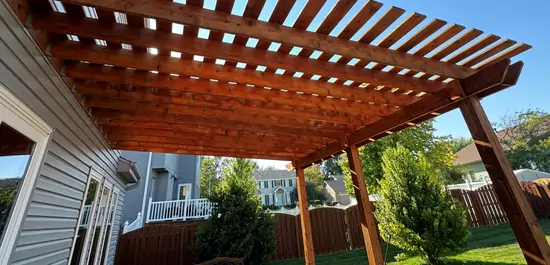
Joist Decay
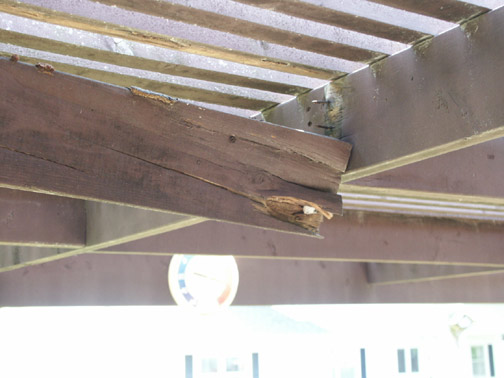
The untreated pine wood on this Pergola patio cover was rotting and decaying. Untreated pine lumber is not suitable for outdoor use. Even treated pine that is properly stained can eventually decay. Cedar or composite woods are the best choice for exposure to the elements in our harsh Midwest climate here in Omaha and Elkhorn NE.
Pergolas take constant sun, moisture, and seasonal temperature changes. Using the right wood type and the right stain system helps prevent premature rot, cracking, and peeling. Proper preparation and allowing new wood to dry before staining are key steps for long-term protection and a consistent finish.
If you are looking to have a Pergola sunshade designed, built, repaired or stained call Scott's Painting & Staining Inc. today for a free design consultation and estimate. We can offer various solutions for all budgets, and will let you know which option is the best long-term solution based on your budget and maintenance plans!
Visit our Pergola Staining Services page for a complete list of Pergola, Deck and Fence Staining Services.
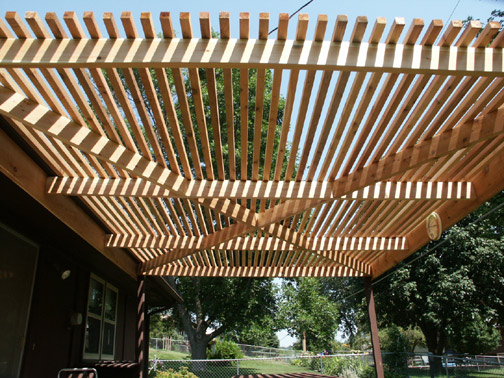
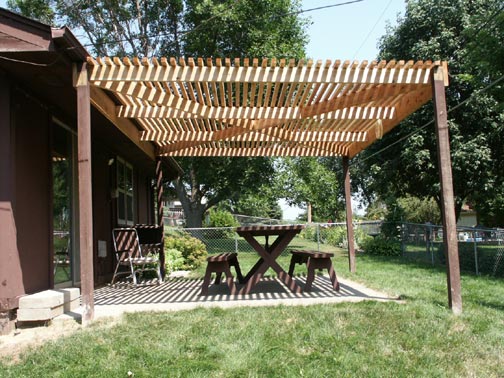
Untreated pine is not designed for long-term outdoor exposure and can absorb moisture quickly, which increases the risk of rot and decay. In Omaha’s Midwest climate, pergolas need materials and protection systems built for the elements.
Yes. Cedar is naturally more resistant to moisture and decay than untreated pine, and it performs well outdoors when properly built and maintained. We can recommend the best material for your budget and goals.
New wood often needs time to dry so stain can penetrate properly. Depending on the wood and exposure, drying time can vary, and we can advise what is best for your specific pergola before staining.
Oil-based stains are designed to penetrate into the wood and typically perform well outdoors. They can provide durable protection and reduce the risk of peeling when the correct stain system is used for the surface and prior coatings.
Generally, no. If a pergola has a latex-based stain or coating, the surface usually needs the correct prep and compatibility checks before switching stain types. We can evaluate the existing finish and recommend the safest approach.