
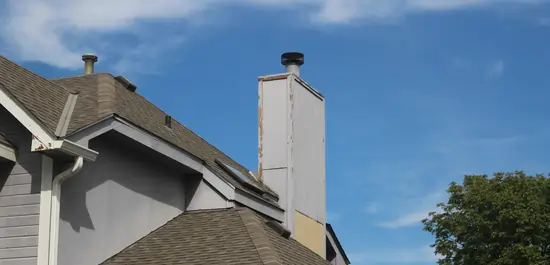
Rotting Chimney

Scott's Painting & Staining Inc. has served Omaha-area homeowners since 1991 and specializes in chimney siding repair and replacement. Chimney siding repair may include removing rotted or swollen siding and trim, correcting accessible water entry points such as failed caulking or flashing, replacing damaged materials, sealing joints and repainting to protect the chimney from moisture.
If you see swollen hardboard siding, soft spots, peeling paint, damaged trim or water staining near the roofline, we can evaluate the chimney and determine whether localized repair or more extensive siding replacement is appropriate.
Because chimneys extend beyond the main exterior wall, water or moisture that enters the chimney chase can run down or collect inside the structure. This may lead to wood rot, mold or damage to the siding, trim and framing. Scott's Painting & Staining Inc. evaluates the condition of the chimney and recommends repairing only the damaged areas whenever practical rather than automatically replacing all of the siding. If chimney deterioration is not addressed early, more extensive siding or structural repairs may eventually be required.
Quick links - on this page:
Hardboard siding requires regular inspection and maintenance, especially on chimneys that receive more direct weather exposure than protected walls. Peeling paint on cedar trim, failed caulking, swollen siding or bulging areas are signs that the chimney should be evaluated for moisture damage.

Scott's Painting & Staining Inc. specializes in chimney siding repair in Omaha, including damaged hardboard siding, chimney trim, flashing and localized wood rot. Chimneys extend above the roofline and receive significant exposure to rain, snow, sun and wind, which can make proper caulking, flashing and paint maintenance especially important. Failed or improperly installed flashing can allow water behind the siding and contribute to rot or mold. When accessible during the repair, we can correct or add flashing and kick-out flashing where appropriate to help divert water away from vulnerable siding and trim.
The chimney siding shown below had extensive deterioration, including rotted trim, damaged siding and improperly installed flashing. Flashing problems can allow water behind the siding and contribute to swelling, wood rot and repeated caulking or paint failure. See our Omaha siding repair services for more information about siding and exterior wood repair.
Many chimney siding problems are difficult to identify from the ground because flashing, siding clearances and moisture entry points may not be obvious. Scott's Painting & Staining Inc. can evaluate the visible condition of the chimney and recommend an appropriate repair or replacement approach.


Chimney siding replacement cost in Omaha typically ranges from about $500 to $2,000, depending on the amount of damaged siding and trim, accessibility, flashing repairs and the extent of hidden wood rot. Painting after chimney repairs may add approximately $300 to $800. More extensive structural damage or full chimney siding replacement can increase the total cost.
Chimney siding takes more wind-driven rain and has more joints, seams and roofline transitions where water can enter. If caulk, trim joints or flashing fails, moisture can get behind the siding and cause swelling, soft spots and rot faster than protected walls under an overhang.
Both are possible. If the damage is localized, affected siding or trim can often be replaced and repainted. If multiple sides are swollen, soft or repeatedly failing from moisture intrusion, more extensive chimney siding replacement may be the better long-term solution.
Yes. Chimney flashing and roofline transitions are common water entry points. During chimney siding repairs, accessible flashing areas can be evaluated and resealed or corrected when needed to help prevent recurring moisture damage.
Common signs include bubbled or peeling paint, swollen hardboard edges, soft spots when pressed, staining near corners, gaps at trim joints and recurring caulk failure. Woodpecker damage may also occur around softened or deteriorated siding.
Rotted, swollen or soft chimney siding should normally be repaired or replaced before painting. Painting over deteriorated siding does not correct the underlying moisture damage and may lead to early paint failure.